

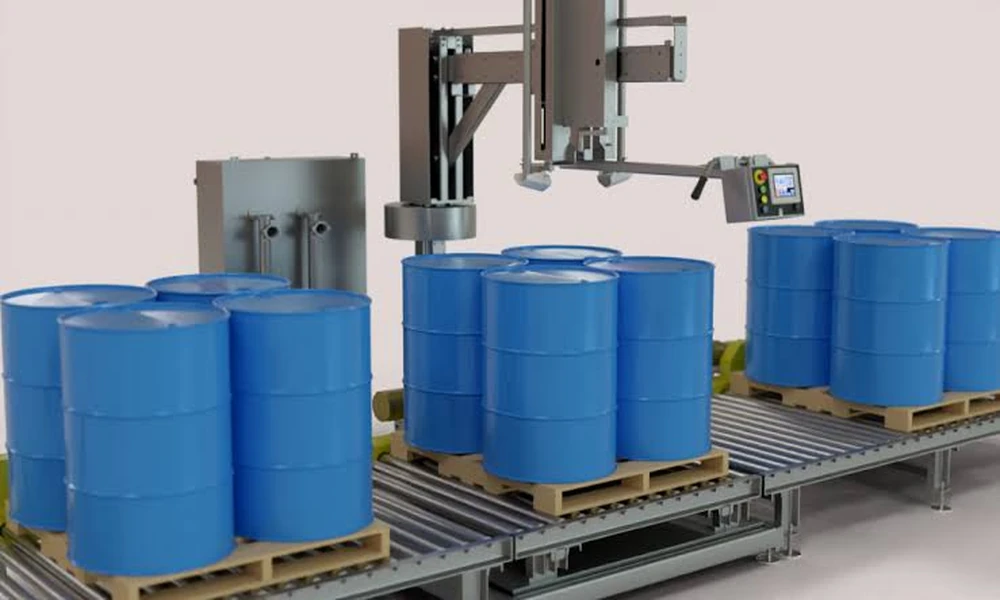
Every overfilled drum gives product away, and every underfilled one risks a customer complaint or a regulatory problem. For manufacturers handling lubricants, chemicals, coatings or food ingredients, those small errors add up over thousands of containers a year. Automated drum filling systems tackle the problem directly by measuring each fill precisely, controlling flow and reducing spills. This article explains where waste comes from in manual drum filling and how automation helps reduce it, with practical points to consider before investing.
Where Waste Comes From in Manual Filling
Manual drum filling relies on an operator watching a scale or level mark and closing a valve at the right moment. Even skilled operators vary from fill to fill, especially late in a shift. To avoid underfilling, many operators deliberately overfill slightly, which means product is given away on every drum. Spills and drips during nozzle removal add further losses, and cleaning up spilled product costs time and creates safety and environmental risks. An overfill of half a percent sounds small, but on a 200-litre drum of a high-value lubricant it can represent a noticeable sum every single fill.
How Automated Drum Filling Works
An automated system typically uses a weighing platform or flow meter to measure product as it enters the drum. A controller opens the filling valve, monitors the weight or volume and closes the valve when the target is reached. Many systems use a two-stage fill, with a fast fill for most of the volume and a slow final fill for accuracy. The result is consistent fills drum after drum, regardless of operator fatigue.
Gross and Net Weight Filling
Drum fillers may fill by gross weight, including the drum, or by net weight, subtracting the drum’s tare. Net weight filling is generally more accurate, since drum weights can vary. Automated systems can tare each drum before filling, ensuring the product weight is correct. This is particularly important for high-value products where small variations in weight represent significant cost. Plastic and steel drums from different batches can differ by several hundred grams, which is enough to matter for valuable products.
Reducing Spills and Drips
Spills often occur when the nozzle is removed from the drum. Automated systems reduce these losses in several ways:
- Drip trays that catch residue at the nozzle
- Anti-drip or shut-off nozzles
- Subsurface filling below the liquid surface
- Bottom-up filling that rises with the product level
These features work together to cut splashing and drips. Bottom-up filling, where the nozzle starts near the bottom and rises as the drum fills, also reduces foaming. Less spillage means less product loss, cleaner work areas and fewer safety hazards.
Handling Different Products
Different products behave differently during filling. Viscous products, such as greases and resins, fill slowly and may need heated lines or larger valves. Foaming liquids, such as some detergents, need careful flow control. Hazardous or flammable products may need explosion-proof equipment. A well-designed drum filling system is configured for the product’s specific characteristics, which reduces waste and improves safety.
Drum and IBC Compatibility
Many facilities fill both drums and intermediate bulk containers. Systems can be designed to handle different container sizes, typically through adjustable nozzle heights and weighing platforms. Handling multiple container types with one system improves flexibility. Considering the full range of containers used helps choose equipment that suits future needs as well as current ones. Roller conveyors and pallet-level platforms also reduce lifting for operators.
Data and Traceability
Automated systems can record fill weights, batch numbers, times and operator details. This data supports quality control, traceability and regulatory compliance. It also helps identify trends, such as gradual changes in fill accuracy that may indicate maintenance needs. Data can be integrated with factory systems or exported for reporting. For regulated products, these records also make audits faster and less stressful.
Labour and Safety Benefits
Automation reduces the need for operators to handle valves and monitor fills manually. Operators can focus on loading drums and supervising multiple processes. Reduced manual handling lowers the risk of exposure to hazardous products and repetitive strain. Safety features such as emergency stops, guards and interlocks protect operators during operation.
Measuring the Benefits
The savings from automation can be estimated by comparing current giveaway, spillage and labour costs with expected performance. Key factors include:
This analysis helps justify investment and set realistic expectations.
Choosing the Right Level of Automation
Not every facility needs full automation. Semi-automatic systems, where operators position drums and start the fill, offer significant accuracy improvements at lower cost. Fully automatic systems with conveyors, capping and palletising suit high-volume lines. Matching automation level to production volume and budget ensures a good return on investment. Many facilities start with semi-automatic filling and add conveyors later as volumes grow.
Planning an Upgrade
Upgrading drum filling equipment involves considering product type, container range, production volume, safety requirements and available space. Working with an experienced supplier helps design a system that fits the facility. For manufacturers exploring automation, a supplier of automatic drum and IBC filling systems can recommend equipment suited to the product and production rate.
