

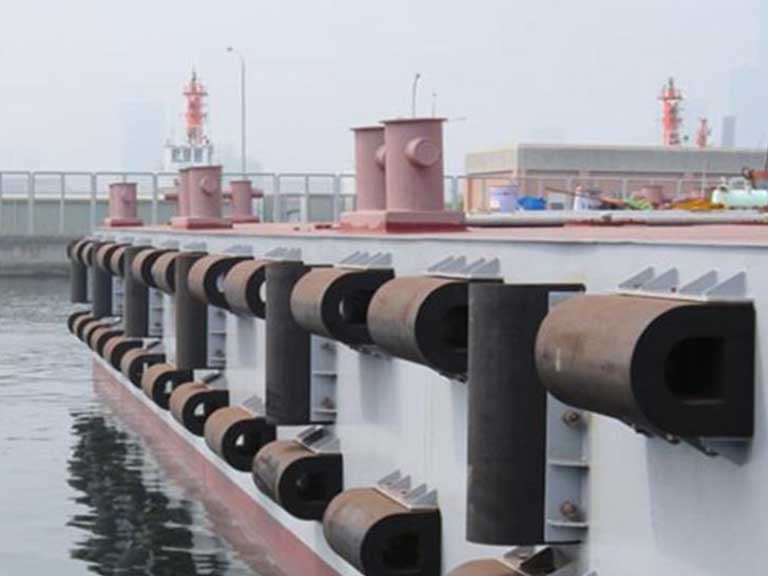
Project Name – Lion rubber
Niche – Marine & Offshore Engineering
Location – India & USA
______________________________________________________________________________
In marine operations, impact is not a question of if but when. Tug boats push, barges berth, pilot boats dock, and workboats operate in tight spaces. In all these situations, the right fender plays a crucial role in protecting both vessels and structures.
That is where the d rubber fender becomes essential.
Known for its simple D-shaped profile and reliable performance, a d fender is widely used across marine applications for side protection, berthing impact control, and structural safety. In this guide, we break down its uses, benefits, and how to choose the right type for your project.
What Is a D Rubber Fender?
A d rubber fender is a D-shaped protective rubber profile designed to absorb impact energy and reduce direct surface contact between vessels and marine structures.
These fenders are commonly installed:
- Along vessel sides (as belting)
- On tug boats for pushing operations
- On jetties and quay walls
- Around workboats and pilot boats
- On offshore platforms
Because of its compact and practical design, the d fender is one of the most versatile marine fender options available.
Types of D Fenders: What’s the Difference?
While all D fenders share the same outer shape, their internal design can vary. Understanding this difference helps you choose the right performance profile.
1. DD Fender
A dd fender features a D-shaped outer profile with a D-shaped hollow core. This design offers:
- Balanced compression response
- Good stability during impact
- Reliable durability in repetitive contact zones
It is often selected where moderate impact absorption and structural firmness are required.
2. DO Fender
A DO fender has a D-shaped exterior with a round hollow inside. The round core can slightly alter compression behaviour and is sometimes preferred based on installation method or energy absorption preference.
This variation is suitable when a different cushioning response is needed without changing the external D profile.
3. D Hollow Fender
A D hollow fender refers broadly to hollow-core D fenders. The hollow design reduces weight while maintaining strong shock-absorbing performance.
Compared to solid profiles, hollow designs typically provide:
- Better energy absorption
- Reduced material weight
- Easier handling during installation
For most marine applications, hollow variants are preferred over solid ones due to improved cushioning performance.
Key Uses of D Rubber Fenders
The popularity of the d rubber fender comes from its adaptability. It is widely used in:
- Tug boat side belting
- Barge protection systems
- Pilot boat docking areas
- Marina jetties
- Offshore platforms
- Workboat hull protection
Its shape allows easy alignment along flat or slightly curved surfaces, making it ideal for side mounting.
Benefits of Choosing the Right D Fender
Selecting the correct d fender is not just about shape. It is about long-term performance and cost efficiency.
1. Impact Protection
D fenders absorb berthing forces and reduce direct contact damage. This helps lower repair frequency and downtime.
2. Good Energy Absorption
Hollow variants like dd fender and DO fender are designed to compress under load, dispersing impact energy effectively.
3. Durability in Harsh Marine Conditions
Marine-grade rubber compounds are built to withstand saltwater exposure, UV radiation, and heavy operational use.
4. Easy Installation
D fenders are typically mounted using flat bars and bolts. Their straightforward design makes them easier to install and replace.
5. Customisation Options
Different sizes, lengths, and profiles are available to match specific vessel requirements. Custom lengths are especially useful for bow and stern radius applications.
How to Choose the Right D Rubber Fender
Choosing between a dd fender, DO fender, or D hollow fender depends on practical factors.
1. Application Type
Is the fender for a tug boat pushing operation? Or for a jetty wall? Vessel-side belting and structure mounting may require different dimensions and thickness.
2. Impact Frequency
If the vessel operates in high-contact environments, select a size that can handle repetitive compression.
3. Size and Mounting Method
Check mounting width, bolt size compatibility, and available space before selecting a profile.
4. Performance Expectations
For higher energy absorption, hollow-core variants are often more suitable than solid profiles.
5. Custom Requirements
If your vessel has curved surfaces or unique geometry, custom-length or specially profiled D fenders may provide better long-term performance.
Why Marine Operators Prefer D Rubber Fenders
The d rubber fender continues to be a preferred solution because it offers a balance of strength, cushioning, and simplicity. It is not overly complex, yet it performs reliably in demanding marine environments.
Whether you are evaluating a dd fender, a DO fender, or another D hollow fender option, the goal remains the same – protect vessels, reduce maintenance costs, and ensure safer operations.
For marine projects requiring durable and application-focused D-fender solutions, we offer a wide range of sizes and configurations designed to meet diverse vessel and structural needs. For larger marine vessels and heavy-duty docking requirements, businesses can also explore large boat fenders for enhanced protection and performance. Choosing the right defender today can prevent costly repairs tomorrow.
