

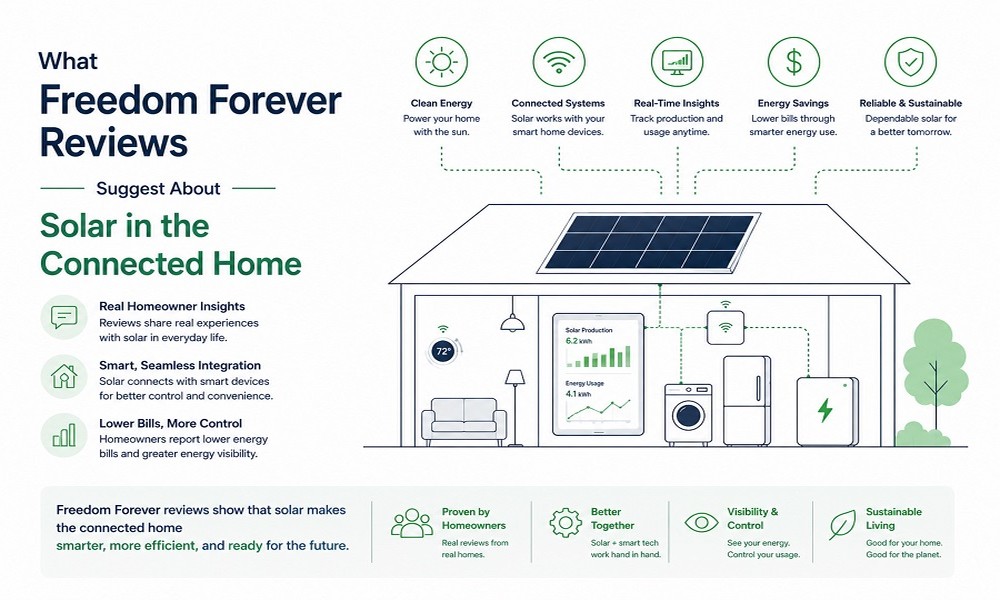
Residential Solar is increasingly positioned at the center of modern home energy systems rather than operating as a stand-alone upgrade. As smart devices, home automation platforms, and energy storage continue to evolve, solar plays a coordinating role that helps shape how electricity moves through a household. Freedom Forever Reviews reflect this shift as homeowners adopt energy systems designed to work together within a connected environment rather than as isolated infrastructure.
This evolution reflects a broader change in how households approach energy management. Electricity use now intersects with device scheduling, climate control, vehicle charging, and backup planning. Solar systems help anchor these decisions by guiding how power enters, circulates, and is prioritized throughout the home. In connected households, solar increasingly serves as a reference point for daily energy use.
From Independent Power Source to System Anchor
Early residential solar systems focused primarily on generation and utility savings. Panels operated independently, supplying power to the home or grid without interacting directly with household energy behavior. Today’s systems are designed to coordinate more closely with appliances, batteries, and digital controls. Solar production data now supports smarter decisions about how energy flows across multiple home systems.
This anchoring role enhances homeowner engagement. When production insights connect to usage patterns, households can align consumption with availability throughout the day. Energy becomes a managed resource rather than something reviewed after the fact. Solar no longer sits at the periphery of home infrastructure; it functions as a central input that helps guide how other systems operate.
Smart Devices Respond to Solar Availability
Connected homes rely on automation to simplify daily energy management. Smart thermostats, lighting systems, and appliances operate on schedules that balance comfort and efficiency. When solar is integrated into this logic, devices respond to real-time conditions rather than fixed assumptions. Energy use adjusts based on production levels, allowing systems to operate more intelligently.
This coordination supports both efficiency and convenience. Devices that operate during periods of higher solar output can reduce reliance on grid power without requiring constant attention. The home feels more responsive because systems align activity with available energy. Solar’s role expands from generation to coordination within the household.
Storage Extends Solar’s Influence
Battery storage has further strengthened Solar’s role in connected homes. By capturing excess production and releasing it later, storage allows Solar to support energy needs beyond daylight hours. Solar becomes a continuous reference point rather than a time-limited resource. Battery storage has further strengthened Solar’s role in connected homes. By capturing excess production and releasing it later, storage allows Solar to support energy needs beyond daylight hours. Solar becomes a continuous reference point rather than a time-limited resource.
This capability supports household reliability planning. Batteries paired with solar systems allow homeowners to prioritize essential loads and maintain continuity during grid disruptions. Energy management becomes more intentional, with storage integrating Solar into broader household planning rather than treating it as a supplemental feature.
Home Automation Benefits from Central Signals
Automation platforms depend on consistent inputs to function smoothly. Solar systems provide one of the most influential signals within connected homes because they define supply conditions. When automation software accounts for production levels, it can sequence household activities more efficiently.
This coordination helps daily routines run seamlessly. Energy-intensive tasks shift naturally without disrupting comfort. Automation performs best when systems respond to real conditions rather than rigid schedules. Solar’s central role reflects its growing importance as a coordinating signal within connected homes. This coordination helps daily routines run seamlessly. Energy-intensive tasks shift naturally without disrupting comfort. Automation performs best when systems respond to real conditions rather than rigid schedules. By anchoring these decisions to solar availability, homes become more adaptive, efficient, and resilient throughout the day. Instead of reacting after energy is consumed, connected systems anticipate demand and adjust in advance. Solar’s central role reflects its growing importance as a coordinating signal within connected homes.
Smarter Homes Start with Clear Energy Insight
Energy visibility shapes how homeowners interact with connected systems. Monitoring platforms associated with solar installations display production, usage, and storage status in near real time. This transparency supports informed decision-making by making energy flows easier to understand.
Freedom Forever reviews often highlight clarity around system performance and energy flow within the home, reflecting how visibility supports a more confident and informed experience. When homeowners can see how energy is produced, stored, and used, engagement increases and energy decisions feel more intuitive.
Energy Decisions Become More Intentional
When solar anchors the connected home, energy decisions take on a planning dimension, charging schedules, climate adjustments, and appliance operation can align with predictable production patterns. Energy management becomes part of everyday household planning rather than a background task.
This approach supports smoother adjustments during periods of high demand or grid stress. Homes with integrated solar systems adapt efficiently because decisions rely on data rather than guesswork. Over time, homeowners gain greater visibility and confidence in how their energy is produced, stored, and used.
A More Deliberate Relationship with the Grid
Connected homes with solar engage thoughtfully with the electric grid. Systems adjust usage based on production and storage levels, helping balance demand during peak periods. Excess energy can be stored or directed strategically, supporting both household efficiency and grid stability.
This interaction positions residential Solar within a broader energy ecosystem. Homes function as responsive participants rather than passive consumers. Solar’s coordinating role inside the home extends outward, shaping how households contribute to shared infrastructure.
Implications for Residential Solar Providers
As solar assumes a central role within connected homes, expectations around coordination and clarity continue to rise. Installation quality remains essential, but integration and operational discipline increasingly shape the overall experience.
This shift highlights the importance of systems that connect seamlessly with automation and storage platforms. Residential solar providers that manage complexity effectively demonstrate reliability through consistency and structure. As homeowners view solar as the control center of the connected home, clarity and integration signal confidence at every stage.
