

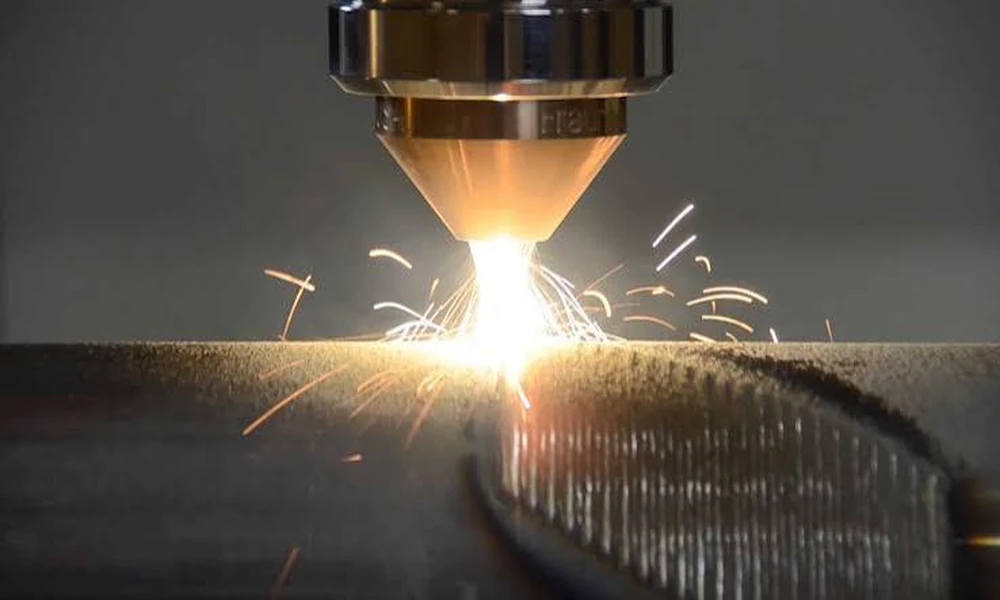
Surface engineering has long been about extending the life of components exposed to wear, heat, and corrosion. Among the techniques available today, robotic laser cladding stands apart for the precision and consistency it brings to high-value industrial parts. The process involves depositing a layer of material onto a substrate using a laser beam as the heat source, bonding the clad material metallurgically rather than mechanically. The result is a dense, well-adhered coating that resists wear and extends service intervals significantly.
Unlike thermal spraying or arc welding, laser cladding produces minimal heat-affected zones. This matters for components made from heat-sensitive alloys, where distortion can render a part unusable. The laser focuses energy with high accuracy, melting only what needs to be melted and leaving the surrounding material largely unaffected.
Where Robotics Changes the Equation
Manual laser cladding has existed for some time, but robotic laser cladding systems have transformed what is operationally possible. A robotic arm fitted with a cladding head can follow complex surface profiles that no human operator could track consistently across a full production shift. The robot maintains a constant standoff distance, travel speed, and powder feed rate, ensuring that every millimetre of the deposit meets the same specification.
In industries such as oil and gas, power generation, and aerospace, component geometries are rarely simple. Valve bodies, turbine blades, shaft journals, and pump casings all have curves, shoulders, and bores that demand precise deposition paths. Robotic control makes it possible to programme these paths in CAD and translate these directly to the cladding head, eliminating the variability that manual operation introduces.
Materials Used in the Process
One of the technical advantages of laser cladding is the range of materials it can deposit. Stellite alloys are common choices for wear-resistant applications. Nickel-based superalloys are used where oxidation resistance at elevated temperatures is required. Tungsten carbide composites are applied in high-abrasion environments such as mining equipment and drill components. Stainless steel cladding is widely used in the food processing and chemical industries where corrosion is the primary concern.
The powder or wire feedstock is delivered into the laser-created melt pool, where it bonds with the base material at the atomic level. The bond strength of a laser clad deposit typically exceeds that of a thermal spray coating by a wide margin, and porosity levels are significantly lower, making the coating structurally reliable under cyclic loading.
Applications Across Industry Sectors
The oil and gas sector has been an early adopter of robotic laser cladding for the refurbishment of down-hole tools, gate valves, and drill collars. The ability to restore components to original dimensions without introducing residual stresses makes it preferable to conventional hard-facing techniques for critical rotating and sealing parts.
In power generation, steam turbine components such as blades and nozzle guide vanes benefit from cladding that restores eroded surfaces. The metallurgical bond ensures the deposit behaves as an integral part of the component under the thermal cycling that characterises turbine operation.
The automotive and heavy equipment sectors use robotic cladding to extend the life of tools, dies, and wear plates. The ability to clad selectively, applying material only where wear occurs, reduces the quantity of expensive alloy consumed per part and lowers the cost per restored component substantially.
- Oil and gas: restoration of gate valves, drill collars, and down-hole tools
- Power generation: refurbishment of turbine blades and nozzle guide vanes
- Automotive and heavy equipment: extending life of tools, dies, and wear plates
- Mining: high-abrasion components such as bucket teeth and cutting edges
Process Control and Quality Assurance
Robotic systems allow parameters such as laser power, scan speed, powder feed rate, and shielding gas flow to be logged in real time for every part produced. This data trail is valuable for quality assurance in regulated industries, where traceability from raw material to finished component is a contractual requirement.
Post-cladding inspection typically involves dimensional measurement, hardness testing, and non-destructive evaluation using dye penetrant or ultrasonic methods. The consistently low defect rates achieved by robotic systems mean that rejection rates are substantially lower than with manual deposition, reducing rework costs.
Cost Considerations and Return on Investment
The capital cost of a robotic laser cladding cell is considerable, but the economics become favourable when the cost of replacing a worn component is compared against the cost of restoring it. For large forged or machined parts, the material and machining value embodied in the substrate far exceeds the cost of a cladding operation. Extending the service life of such components by a factor of two or three delivers savings that justify the investment within a modest number of cycles.
Operating costs are driven mainly by laser consumables, powder costs, and programming time for new component geometries. Once a programme is established, repeat jobs run efficiently and with minimal operator intervention, keeping the cost per part predictable.
Developments Shaping the Technology
Research into laser cladding continues to expand the range of substrates and deposit combinations that can be processed reliably. Functionally graded coatings, where composition changes gradually through the deposit thickness, are being investigated for applications where a single alloy cannot satisfy all the performance requirements at the surface and at the bond line simultaneously.
Integration with in-process monitoring using thermal imaging and spectrometry is making it possible to detect deposition anomalies in real time and adjust parameters automatically, moving towards closed-loop process control that reduces the need for post-process inspection.
As the technology matures and the cost of laser sources continues to fall, robotic laser cladding is expected to become accessible to a wider range of manufacturers and service providers, extending the benefits of precision surface engineering beyond the aerospace and energy sectors where it first established itself.
Alongside robotic laser cladding, thermal spray coating solutions in India offer manufacturers another effective approach to improving surface durability, wear resistance, and corrosion protection. Selecting the appropriate surface treatment depends on the component material, operating environment, and required performance, helping industries extend equipment life and reduce maintenance costs.
