

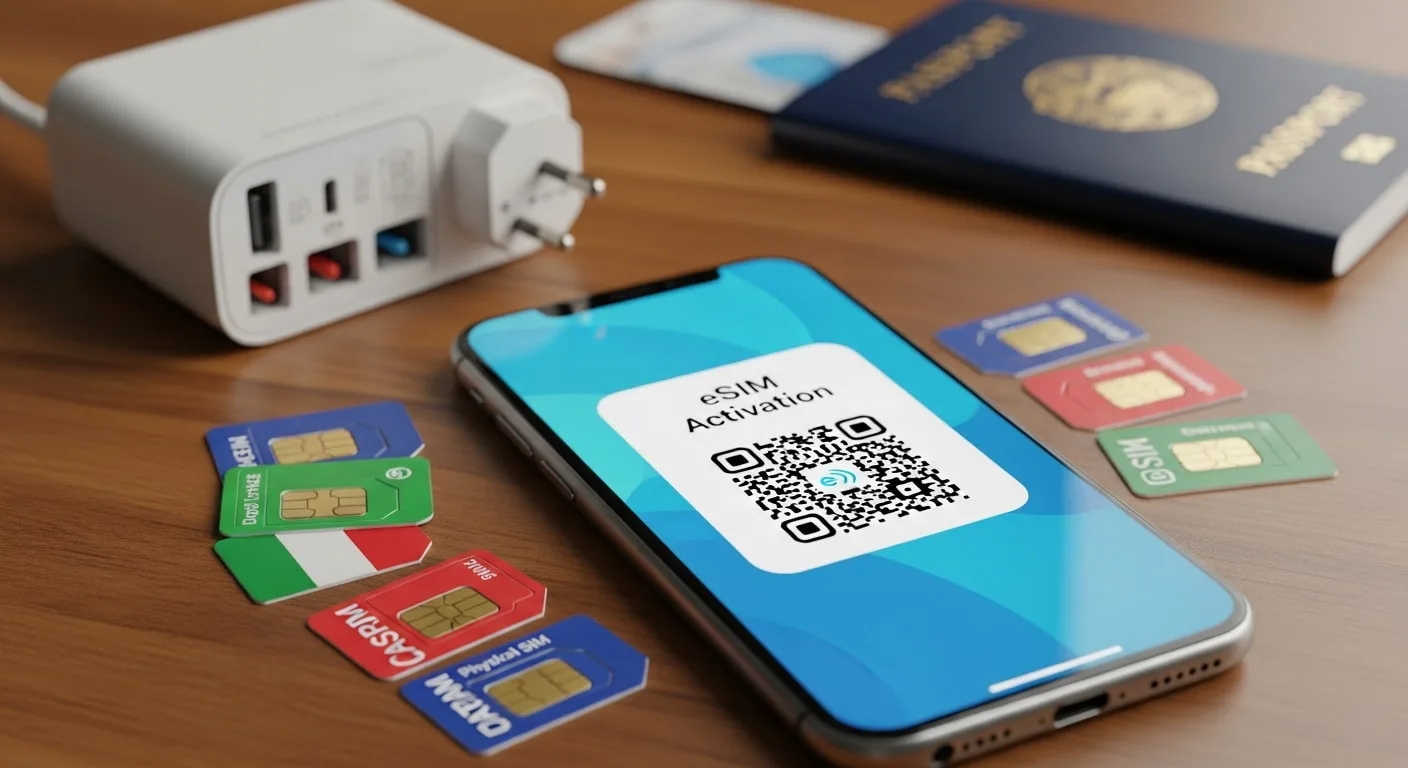
Before travelling overseas, Malaysians usually think about flights, hotels, luggage and currency exchange. Mobile data is often left until the last minute. Then the question appears at the airport: should you use roaming, buy a local SIM, or depend on WiFi?
There is no single answer for every trip. Roaming is convenient because you keep your Malaysian number active. A local SIM may be cheaper for long stays or heavy data use. WiFi can help, but it is not reliable enough for the whole trip. The right choice depends on destination, trip length, data needs, calls, banking OTPs and how much hassle you are willing to accept.
This guide compares roaming and local SIM cards in a practical way for Malaysians travelling for holidays, business, study, family visits or short regional trips.
Why Mobile Access Matters Overseas
Your phone becomes more important the moment you land. You need it for maps, ride-hailing, hotel directions, translation, WhatsApp, flight updates, food searches, banking, e-wallets and emergency contact. If the line is not ready, simple travel tasks become stressful.
This is why travellers should decide before departure. Waiting until arrival can lead to rushed choices, airport SIM queues, expensive pay-per-use roaming or unsafe public WiFi use.
The Case for Roaming
Roaming is convenient because you continue using your existing Malaysian number. Your WhatsApp stays connected, family can reach you, and banking or account verification messages are easier to manage. You do not need to change SIM cards or explain a temporary number to anyone.
For prepaid users, a prepaid roaming pass can provide upfront cost control. You buy the pass for the destination and validity you need, then use the data during the trip. This is especially practical for short holidays, ASEAN travel and occasional overseas trips.
Roaming is also useful for people who travel for work and need to stay reachable on their normal number. The main risk is using roaming without the right pass or outside the pass coverage. That can lead to higher charges.
The Case for a Local SIM
A local SIM can be useful for longer trips, heavy data usage or travellers who need a local number. In some countries, local tourist SIMs offer large data packages at attractive prices. This can be helpful for backpackers, long-stay visitors or people who will make many local calls.
The trade-off is inconvenience. You may need to queue, show your passport, choose from unfamiliar packages, change SIM cards, keep your Malaysian SIM safe and manage a temporary number. If your phone supports only one physical SIM, this can be frustrating.
A local SIM also does not fully replace your Malaysian number. Banking OTPs, family calls and existing work contacts may still depend on your main line.
Postpaid Travellers Should Check Their Plan First
If you already use a postpaid plan, check whether roaming passes or travel add-ons are available before the trip. Postpaid roaming can be convenient because charges and add-ons are managed through the same account, but users must check destination coverage and standard rates carefully.
Do not assume local postpaid data works overseas. Domestic data and domestic unlimited calls usually apply within Malaysia. Once abroad, roaming terms apply unless your plan specifically includes travel benefits.
Device Readiness Matters Too
Travel also exposes phone weaknesses. Poor battery life, weak storage, old network support or a damaged SIM tray can become a problem overseas. Travellers planning an upgrade may compare phone plan deals with free phone before a major trip, especially if they want a 5G-ready device and a plan together.
That said, do not upgrade only because of a trip unless the phone genuinely needs replacing. For most short trips, a working phone with a proper roaming pass is enough.
Compare by Trip Length
For a one-to-three-day trip, roaming is often simpler. You can activate a pass, keep your number and avoid airport SIM setup. For a one-week trip, compare both options based on data usage and convenience. For a month-long stay, a local SIM may be worth considering if you need heavy data or local calls.
Short regional trips to Singapore, Thailand or Indonesia often favour roaming for convenience. Longer study, work or family stays may justify a local SIM.
Compare by Data Usage
Light travellers mainly need maps, WhatsApp, bookings and occasional browsing. Roaming passes usually handle this well. Regular travellers use social media, food searches, ride-hailing and photo uploads. Heavy users stream videos, use hotspot, take video calls or work remotely. They must compare data quotas more carefully.
If you need hotspot for a laptop, check whether roaming supports it and how quickly the data may be used. A local SIM can be better for very heavy hotspot usage, but setup may take more effort.
Calls, SMS and OTPs Can Decide the Choice
Many travellers forget about calls and SMS. A roaming pass may be data-only, while normal calls and SMS are charged separately. A local SIM may provide local calling, but your Malaysian number may not receive calls the same way if it is removed or inactive.
If banking OTPs, family contact, office calls or emergency reachability matter, keeping your Malaysian line active is valuable. This is one of the main reasons travellers still choose roaming.
Safety Tips Before Leaving Malaysia
- Check roaming pass coverage for your destination.
- Download offline maps before flying.
- Turn off mobile data app updates.
- Disable cloud photo backup on mobile data.
- Check standard roaming call and SMS charges.
- Carry a power bank for long travel days.
- Keep your Malaysian SIM safe if you use a local SIM.
- Avoid sensitive transactions on unknown public WiFi.
Final Word
Roaming and local SIM cards both have a place. Roaming is easier, keeps your Malaysian number active and suits short or regular travel. A local SIM can be useful for long stays or very heavy data use. The best option depends on your trip, not on a general rule.
Malaysian travellers should decide before departure, not after landing. Check destination coverage, data needs, calls, SMS, OTP requirements and phone readiness. A little preparation can save money and prevent stress overseas.
Traveller Scenarios: Which Option Fits Best?
A weekend traveller to Bangkok, Singapore or Jakarta usually values convenience. Roaming often fits this user because the trip is short, the Malaysian number remains active and there is no need to queue for a local SIM. A small roaming pass may be enough for maps, messaging, ride-hailing and basic browsing.
A long-stay traveller may think differently. Someone staying overseas for a month may need heavy data, local calls and a local number. In that case, a local SIM can be practical, especially if the person will deal with local services every day. The Malaysian SIM can still be kept active for OTPs and important calls if the phone supports dual SIM.
A business traveller often prioritises reliability. Roaming may be better because the existing number remains reachable and there is less setup risk. A backpacker may prioritise cost and may accept the inconvenience of buying a local SIM. A family traveller may value simplicity because managing several local SIMs for parents and children can become annoying.
Do Not Depend Only on Public WiFi
Public WiFi can help reduce data usage, but it should not be the main plan. Airport WiFi may require registration, hotel WiFi may be weak, and café WiFi may not be secure. Travellers still need mobile data for moving around, booking rides, checking maps and contacting family outside buildings.
Public WiFi also carries security concerns. Avoid banking, sensitive logins or confidential work on unknown networks unless proper security measures are used. Mobile data through a planned roaming pass or trusted SIM is usually safer for important activity.
The best travel setup often combines both: use mobile data for essential movement and communication, and use trusted WiFi for large uploads, app updates and video streaming. This keeps costs under control without leaving the traveller disconnected.
Before departure, travellers should also test their phone settings, confirm roaming is enabled or disabled as intended, and save the customer-care details they may need abroad. A five-minute check in Malaysia is easier than troubleshooting after landing.
FAQs
Is roaming better than a local SIM?
Roaming is better for convenience and keeping your Malaysian number active. A local SIM may be better for long stays or heavy local data usage.
Should I buy a roaming pass before travelling?
Yes, if you plan to use mobile data overseas. It gives better cost control than pay-per-use roaming.
Do roaming passes include calls and SMS?
Not always. Many are data-focused, so voice calls and SMS may be charged separately.
When is a local SIM worth it?
It may be worth it for long trips, heavy data use, or when you need a local number.
Can an old phone affect travel connectivity?
Yes. Poor battery, limited network support or SIM issues can create problems overseas. Check your phone before travelling.
