

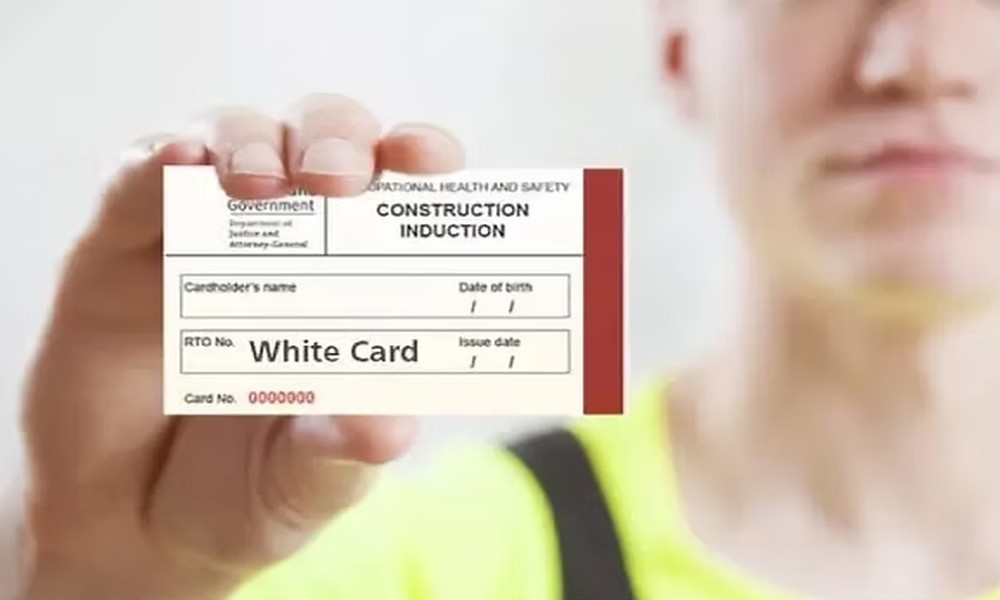
Melbourne’s building scene moves fast. Cranes dot the skyline. Suburbs keep getting denser. And yet, plenty of workers who are genuinely keen to get started lose weeks sitting on the sidelines – not because they lack skill, but because one piece of paperwork is missing. A white card in Melbourne is that piece. Simple on the surface. But what it unlocks, and how it plays out in real working life, tends to surprise people who thought they already understood it.
The Card Has No Expiry – Your Awareness Might
There is no renewal date stamped on the card. Workers tend to see that as a bonus. Fair enough. But WorkSafe Victoria revisits its codes of practice fairly regularly, and the person who earned their card years back and never looked at safety documentation since is operating on outdated information. The card still gets them through the gate. It does not guarantee they are across current fall prevention requirements or the latest protocols around hazardous materials handling. Foremen pick up on that gap. Safety officers pick up on it faster.
Melbourne’s Ground Conditions Change Everything
Generic induction training covers hazards in broad strokes. Melbourne, though, has a ground profile that catches people out. The basalt plains underneath much of the inner city mean excavation work behaves differently here than it does elsewhere. Around Docklands, Southbank, and older inner suburbs, crews regularly hit compacted fill and buried infrastructure that predates modern mapping. Site access in the CBD fringe is often tight enough that standard risk hierarchies get compressed. Understanding the card’s content in the context of where a worker will actually be standing – not just a training room – is the difference between reciting theory and actually applying it.
Labour Hire Firms Check This Before Your Trade Ticket
Qualified tradespeople get caught out by this regularly. A licensed carpenter or electrician without a current white card in Melbourne gets turned away from a labour hire placement before the trade licence even comes up for discussion. Compliance checks run in a fixed order on most Melbourne builds, and the general induction card sits right at the top of that list. The reason is straightforward – without it, the placement company’s site insurance is compromised. That is not a conversation any firm wants to have. Experienced tradespeople who don’t know this order of priority often end up waiting days while the paperwork side catches up.
Interstate Cards Come With Hidden Friction
National recognition is genuine. The card earned in another state is supposed to be accepted here. But workers relocating from Queensland or New South Wales, particularly those who completed training under older state-specific schemes before the national harmonisation, sometimes find that site safety officers look at the card and hesitate. The issuing authority is unfamiliar. The format looks different. It does not get rejected outright – but it creates a moment of friction that delays entry to the site. Carrying a copy of the unit completion record from the registered training organisation irons that out quickly and avoids the back-and-forth.
It Is the Starting Point for Nearly Every Licence Above It
Almost every higher-level certification in Victoria’s construction licensing framework lists the general induction card as a prerequisite – elevated work platforms, dogging, rigging, crane operation, and beyond. What rarely gets mentioned is that workers who genuinely engaged with the risk management framework during induction move through those follow-on courses faster. The logic of identifying, assessing, and controlling hazards is already embedded. Workers who treated induction as an administrative hurdle tend to hit a wall in advanced training where that foundational thinking is suddenly assumed. Getting the card right the first time is a quiet investment that pays dividends well past the first site gate.
Conclusion
The process of obtaining a white card in Melbourne is not complicated. The mistake is treating it as if that simplicity means it does not matter much. In a city where construction activity is relentless and the competition for consistent, well-paying site work is real, the workers who extract the most from this qualification are those who understood what it was actually for. Not just a gate pass. A foundation. One that shows up in how supervisors read a room, how quickly follow-on licences click into place, and how a worker carries themselves when something unexpected happens on site. That is what the card really opens.
